IT operations used to assume someone could walk into the server room. Today many infrastructure teams are fully remote or hybrid, much of the infrastructure lives in the cloud, and the on-premises hardware that remains may be in a data centre hundreds of miles away. Running operations well in this world depends on secure access, good tooling and clear processes. Here are the trends shaping remote IT operations and the practices that make them work.
Secure remote access is the foundation
Every remote operation starts with getting onto the right system safely. Common patterns include:
- Multi-factor authentication everywhere. Administrative access should never rely on a password alone.
- Single sign-on for consoles and tools, so access can be granted and removed in one place.
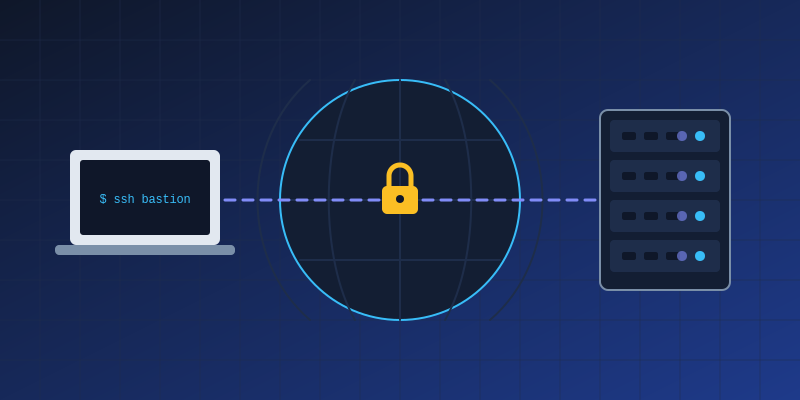
- Bastion (jump) hosts as a controlled entry point to internal networks, with logging of who connected and when.
- Zero-trust style access, where each request is authenticated and authorised based on identity and device rather than simply being "inside the VPN".
- SSH keys or short-lived certificates instead of shared passwords, with keys removed promptly when people leave.
Out-of-band management for physical hardware
When a server hangs and nobody is on site, out-of-band management is what saves the day. Baseboard management controllers, accessed through standards such as IPMI or Redfish or vendor tools such as Dell iDRAC and HPE iLO, let you power-cycle a machine, view its console and mount installation media remotely. Keep these interfaces on a separate, restricted management network, change default credentials and keep firmware updated, because they are powerful and attractive targets.
Infrastructure as code makes location irrelevant
When servers, networks and cloud resources are defined in code and applied through a pipeline, it no longer matters where the engineer is sitting. Changes go through version control and review, and the same process works from anywhere. This is one of the biggest reasons remote operations have become practical at scale.
ChatOps and shared visibility
In an office, people could see a colleague staring at a dashboard. Remote teams need that visibility in shared spaces. ChatOps brings alerts, deployment notifications and even approved commands into team chat channels, so everyone can see what is happening and what was done. Shared dashboards and a single place for incident communication keep everyone on the same page.
Handoffs across time zones
Distributed teams can provide coverage around the clock without night shifts by using a follow-the-sun model, where each region covers its own working hours. This only works with disciplined handoffs: a written summary of open incidents, changes in progress and anything unusual. A simple template, filled in at the end of every shift, prevents the "I thought you were handling it" problem.
Remote-ready runbooks
A runbook that says "check the cable on the back of rack 4" assumes someone is on site. Remote-ready runbooks list the remote equivalent first, such as checking link status through the switch or the management controller, and say clearly when to request on-site support. Include links to the consoles, dashboards and access paths each step needs, so nobody wastes time hunting for them during an incident.
Working with remote hands
Many colocation providers offer "remote hands" services for physical tasks. Prepare for them in advance: label equipment clearly, keep an accurate rack diagram, and write instructions that someone unfamiliar with your setup can follow. A photo of the front and back of each rack, stored with the documentation, is extremely useful.
Security and audit in a distributed world
Remote operations increase the number of places from which privileged access happens. Centralise logs from bastion hosts, cloud consoles and configuration tools, and review them. Use privileged access only when needed, and record administrative sessions where your policies require it. Regular access reviews catch accounts that should have been removed.
Looking ahead
The direction is clear: more automation, more identity-based access, more infrastructure defined as code, and fewer tasks that need someone physically present. Teams that invest in secure access, good documentation and clear communication will find that remote operations are not a compromise but simply how modern IT works.
Sysily is an independent educational site and does not sell software or services. Vendor and product names are examples only; follow your organisation's security policies and vendor documentation.